


“No more standing by, it’s time to make a choice…
“No more standing by, it’s time to make a…
“Miles of open asphalt, stories etched in dust… …
“Miles of open asphalt, stories etched in…
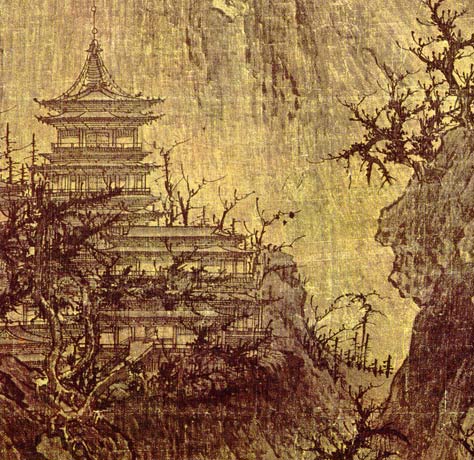
Himalayas, 1502
Journal Entry: “The mountain spoke without…
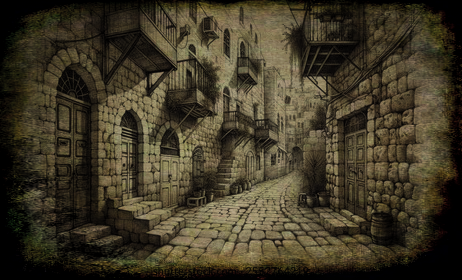
Jerusalem, 1498
Journal Entry: “Three scholars argued scripture…
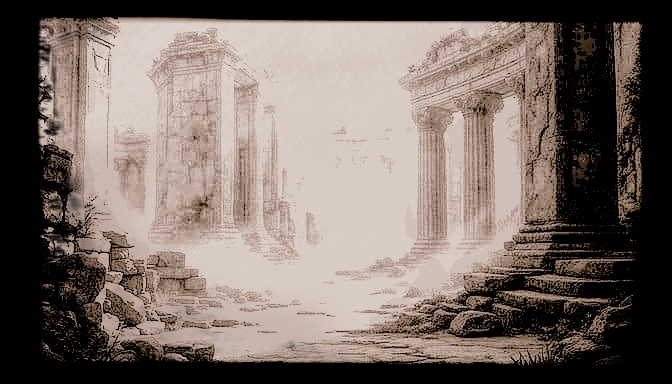
Alexandria, 1494
“The desert wind erases footprints quickly. It…
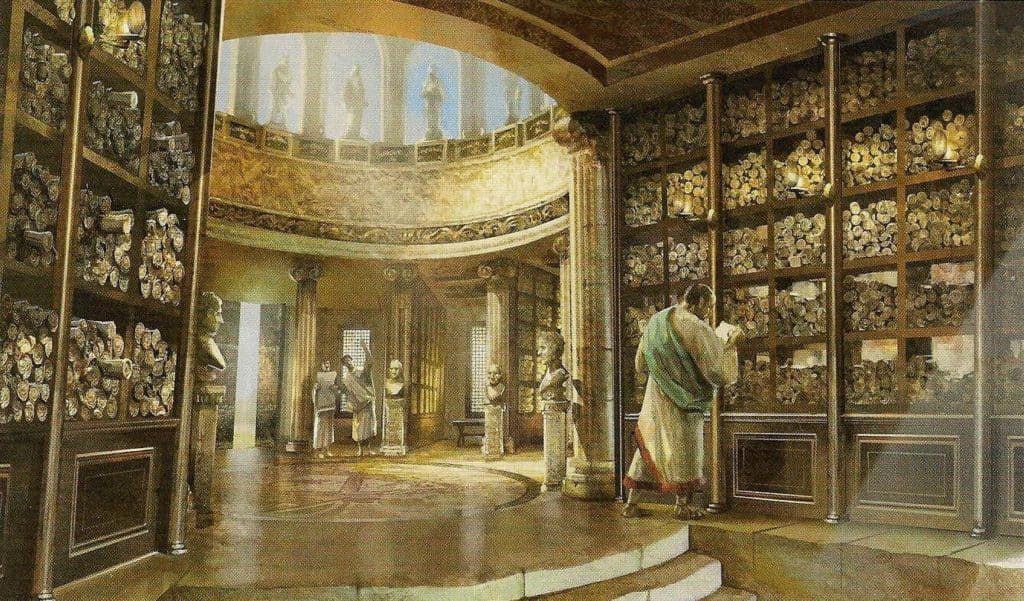
Constantinople, 1490
Journal Entry: “In the old libraries the silence…
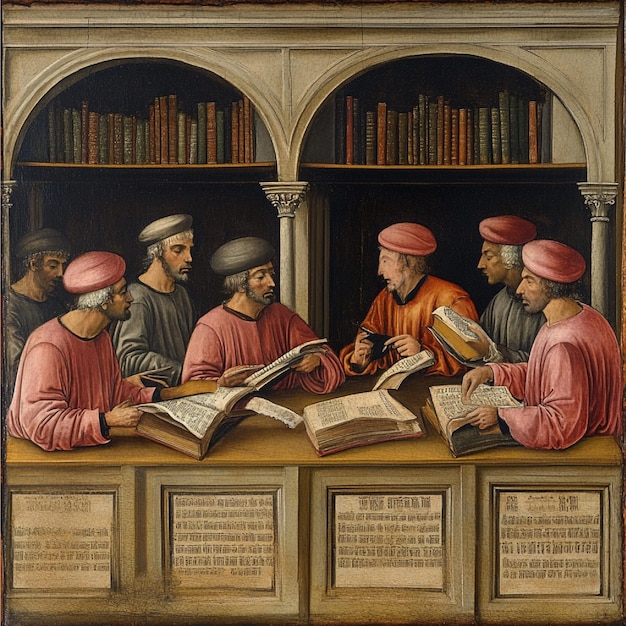
Florence, 1483
Journal Entry: “Botticelli spoke of beauty…
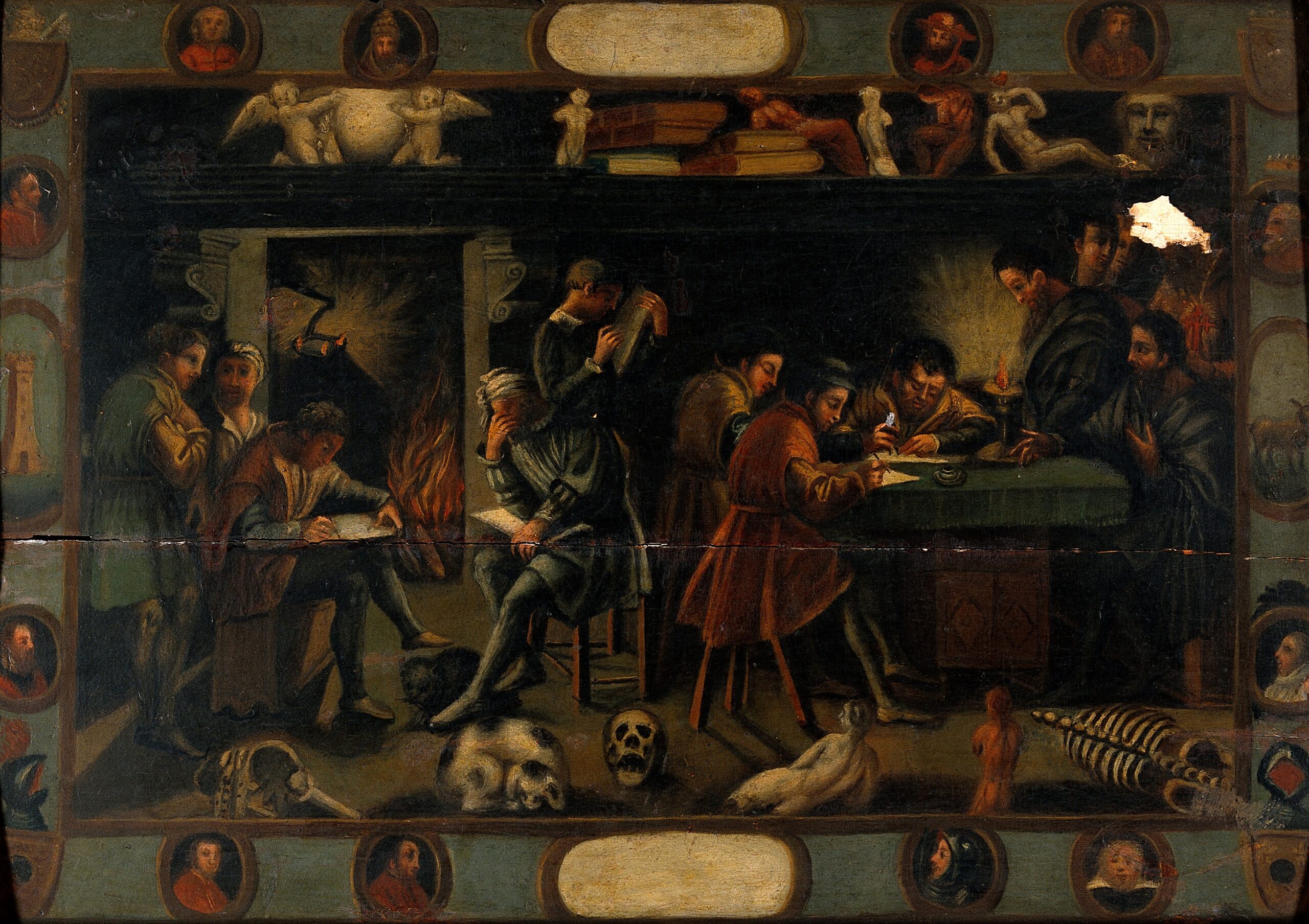
Florence, 1476
Journal Entry: “The fresco dust settles on my…
DO NOT USE
The History
GIO
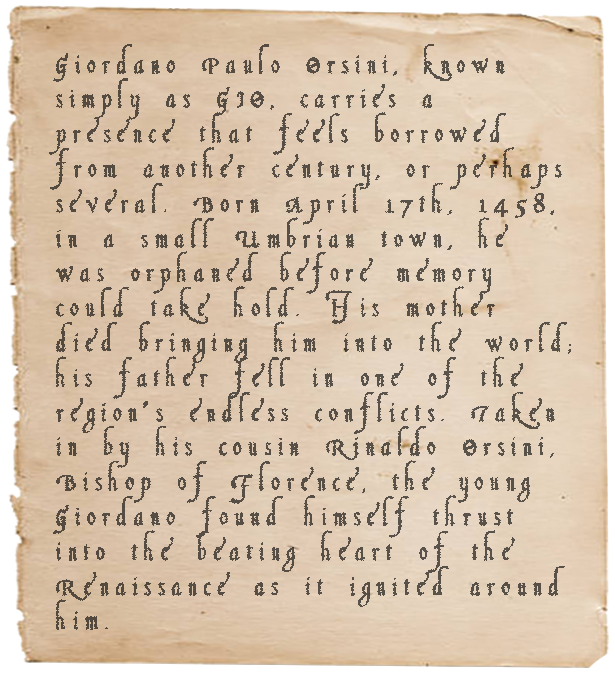
Giordano Paulo Orsini, known simply as GIO, carries a presence that feels borrowed from another century, or perhaps several. Born April 17th, 1458, in a small Umbrian town, he was orphaned before memory could take hold. His mother died bringing him into the world; his father fell in one of the region’s endless conflicts. Taken in by his cousin Rinaldo Orsini, Bishop of Florence, the young Giordano found himself thrust into the beating heart of the Renaissance as it ignited around him.
Florence: The Formation
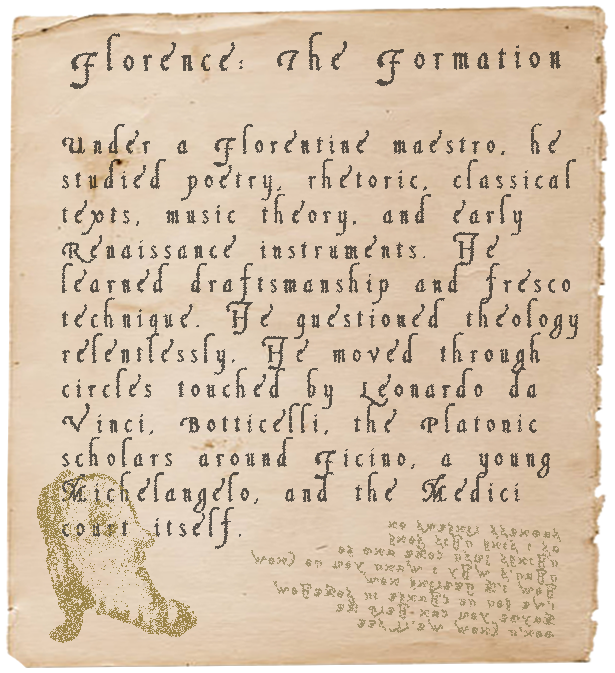
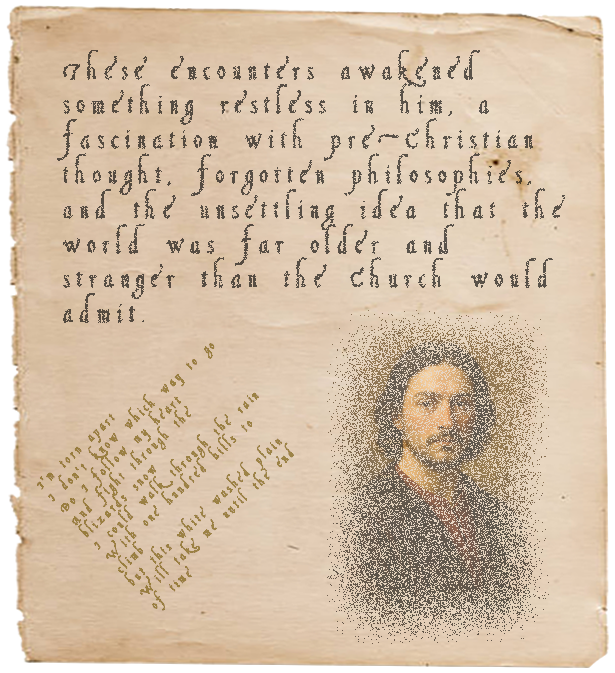
Under a Florentine maestro, he studied poetry, rhetoric, classical texts, music theory, and early Renaissance instruments. He learned draftsmanship and fresco technique. He questioned theology relentlessly. He moved through circles touched by Leonardo da Vinci, Botticelli, the Platonic scholars around Ficino, a young Michelangelo, and the Medici court itself. These encounters awakened something restless in him, a fascination with pre-Christian thought, forgotten philosophies, and the unsettling idea that the world was far older and stranger than the Church would admit.
The First Journey East
By his late twenties, Giordano left Florence under circumstances that remain unclear. He traveled through Constantinople, where he spent years absorbing preserved Greek and Hermetic texts in forgotten libraries. He ventured to Alexandria, where echoes of older mysteries still clung to crumbling temples and hidden archives. He walked through Jerusalem and Damascus, sitting with scholars of many faiths, collecting fragments of knowledge the West had long dismissed or feared. His path led him to northern India and the edges of the Himalayas, where he disappeared into regions rarely documented by European travelers.
His journals from this period grow increasingly fragmented, the handwriting more erratic. The entries shift from careful observations to strange poetry.
The Return
Between 1505 and 1510, his writings speak in metaphors about “thresholds,” “unseen teachers,” and “the night that listens back.” There are gaps, months, sometimes years, where no record exists. When he finally returned to Italy, something fundamental had changed.
People began to whisper. He hadn’t aged as he should have. A man who had left in his twenties returned looking barely older after decades abroad. His health became unusually resilient, he survived illnesses that killed others, recovered from injuries with unnatural speed. His eyes carried a depth no one could quite describe, as if they had witnessed something beyond the edge of what words could capture. A quiet unease followed him, subtle, but persistent. Those who studied him too closely felt it: a wrongness they couldn’t name, an instinct that whispered he was not entirely what he appeared to be.
The Quiet Centuries
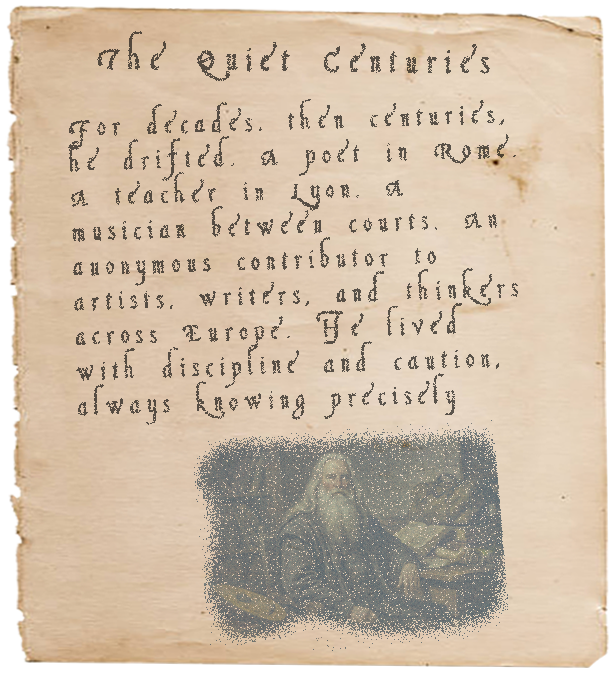
For decades, then centuries, he drifted. A poet in Rome. A teacher in Lyon. A musician between courts. An anonymous contributor to artists, writers, and thinkers across Europe. He lived with discipline and caution, always knowing precisely when to vanish.
The Enlightenment Wanderer
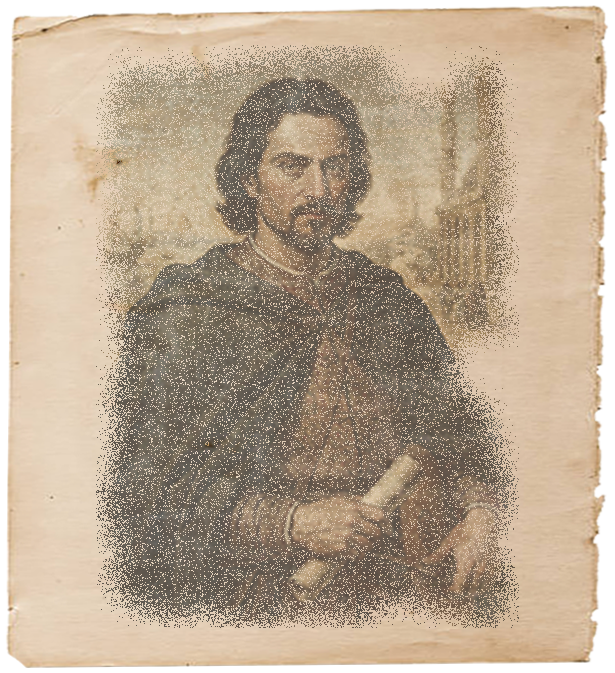
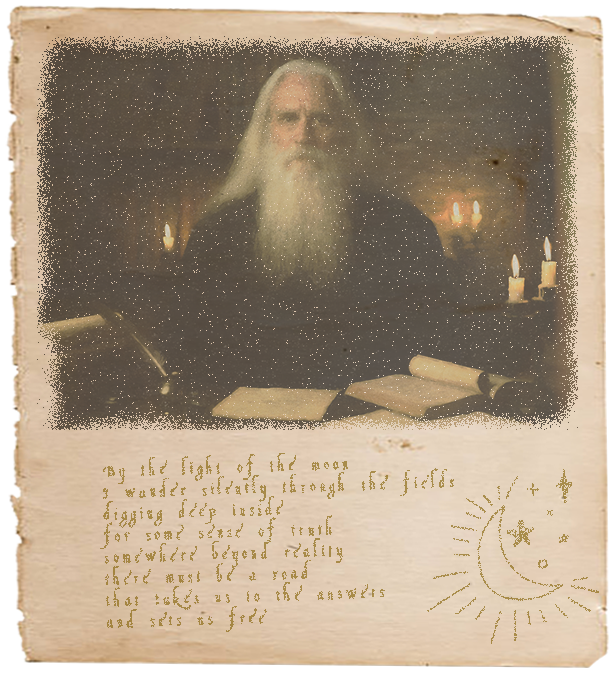
By the 18th century, GIO surfaced in Parisian salons, speaking softly about ancient philosophies. He appeared in Vienna’s music halls, quietly influencing early Romanticism. In Prague, he met with alchemists and mystics in hidden cellars. His appearance had stabilized, silver streaking through long dark hair, a dignified beard, dark academic clothing. Those who encountered him left with lingering descriptions: “A scholar who never seems to sleep.” “Someone whose eyes look like they’ve read the world twice.”
The Victorian Occultist
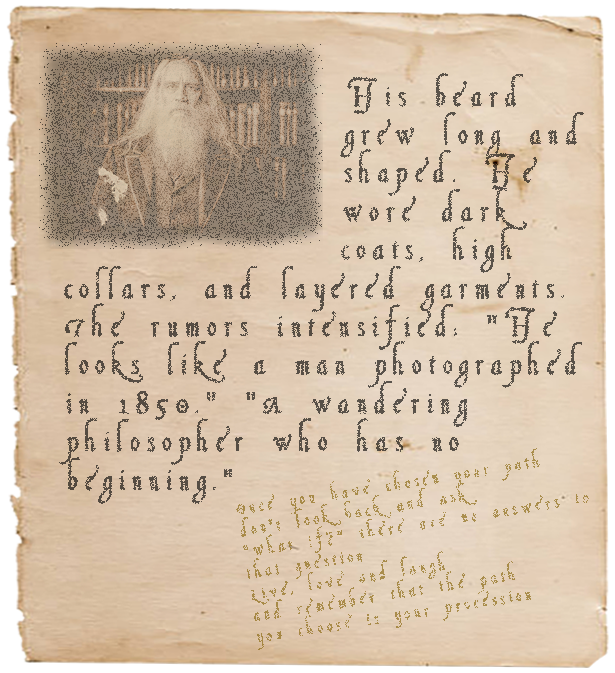
The late 19th century found him immersed in Victorian occult societies and spiritualist salons. He moved through late-Romantic music circles under various pseudonyms. He observed the birth of modern psychology, quietly watching Freud and Jung reshape understanding of the mind. His hair had turned fully silver. His beard grew long and shaped. He wore dark coats, high collars, and layered garments. The rumors intensified: “He looks like a man photographed in 1850.” “A wandering philosopher who has no beginning.”
The Shadow of Modernity
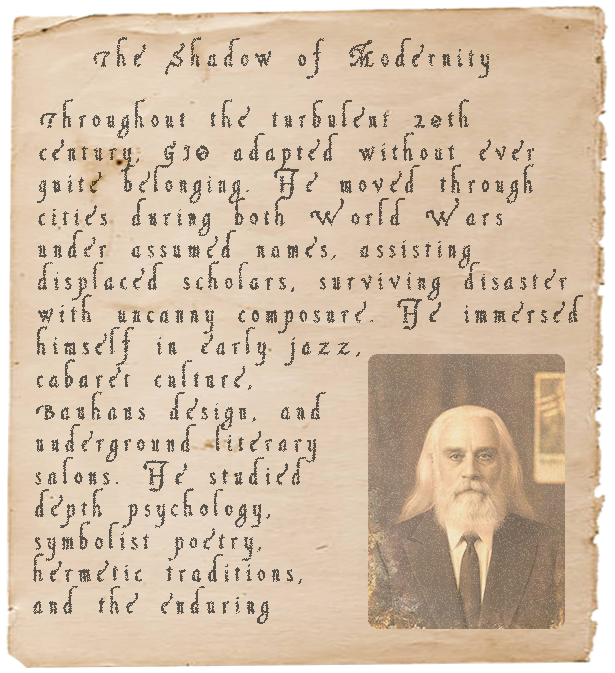
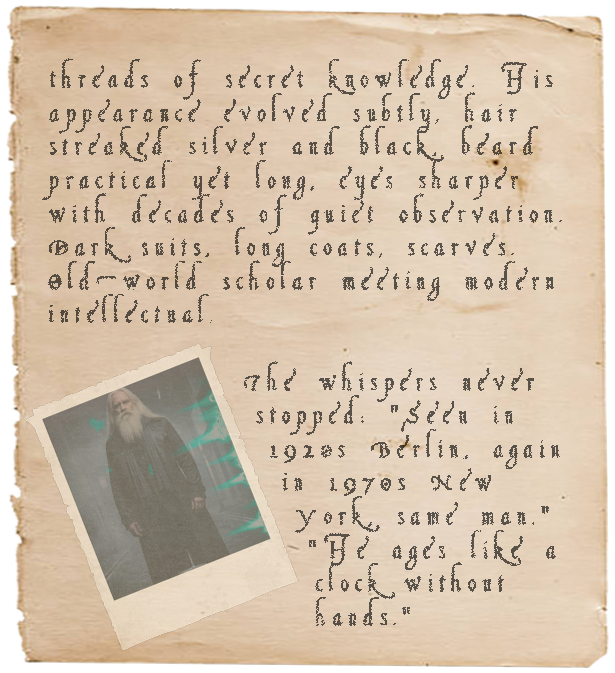
Throughout the turbulent 20th century, GIO adapted without ever quite belonging. He moved through cities during both World Wars under assumed names, assisting displaced scholars, surviving disaster with uncanny composure. He immersed himself in early jazz, cabaret culture, Bauhaus design, and underground literary salons. He studied depth psychology, symbolist poetry, hermetic traditions, and the enduring threads of secret knowledge. His appearance evolved subtly, hair streaked silver and black, beard practical yet long, eyes sharper with decades of quiet observation. Dark suits, long coats, scarves. Old-world scholar meeting modern intellectual.
The whispers never stopped: “Seen in 1920s Berlin, again in 1970s New York, same man.” “He ages like a clock without hands.”
The Present
Today, GIO emerges as a figure shaped by centuries of wandering and questioning. Long grey hair, weathered beard, dark monastic attire. Eyes carrying the calm weight of someone who has watched empires rise and fall. There’s something in his presence, an aura that lingers without explanation, a subtle wrongness that draws people in even as it unsettles them.
His music reflects the vastness he carries: atmospheric guitars and sweeping minor-key melodies, cold pulsing rhythms, dusty apocalyptic desert imagery woven with spiritual swagger and haunted romanticism. Onstage, he appears as a prophet from a past that never truly ended, a wanderer draped in memory, grit, and the last embers of lost faiths.
His followers describe him in fragments: “A man carrying the ghost of history.” “A voice that has survived a thousand winters.” “Someone who shouldn’t look as young as he does… yet somehow is ancient.”
His lyrics wrestle with everything he’s witnessed, belief systems rising and crumbling, corruption, desire, and the persistent pull of something older than modern light can wash away.
When asked where he is really from, GIO smiles faintly: “Farther than you think. Closer than you’d guess.”
The Music
LIVE AT RETROMATIC STUDIOS
VIA STATIC REALMS
The Static Realms show I was on was absolutely awesome. We premiered videos for 2 new tracks off the album, I revealed a secret or two and played this awesome live set for all the viewers. To see the whole show just click RIGHT HERE!

The Videos




Contact
This site is protected by reCAPTCHA and the Google Privacy Policy and Terms of Service apply.